A copper smelter is paying more for known feedstock than it was a year ago. The spread against a mixed, poorly-graded pile widens with every price move. That gap is not new. What is new is how fast it's compounding.
Aurubis, Umicore, and Sims all just told the market their recycling and lifecycle businesses are doing well.[1] The disclosures answer a question operators keep asking: is the downstream healthy right now? Yes, but only for operators who can be specific about what they have. That specificity is what AI pricing intelligence in the secondary electronics market actually has to deliver.
The rest is downstream from that.
What Aurubis, Umicore, and Sims actually said
Three of the largest recyclers in the world reported meaningfully improved results, and each traced the improvement to slightly different drivers.
Aurubis raised its 2025/26 operating EBT guidance to €425 million to €525 million, citing a markedly higher metal result helped by precious-metals pricing and slightly higher earnings from processing recycling material. It also flagged continued pressure on treatment and refining charges for copper concentrates and tightness in certain feedstock streams.[1]
Umicore called its Q1 2026 recycling performance “very strong,” pointing to high activity, favorable metal prices, and precious-metals-related trading conditions. It expects 2026 adjusted EBITDA of around €1 billion.[1]
Sims credited its HY26 EBIT growth to Sims Lifecycle Services (the IT asset disposition, or ITAD, arm) and improved core metal recycling. SLS is highlighted as a meaningful earnings contributor in the FY26 outlook.[1]
Three companies, three angles into the same underlying condition: downstream demand for high-value secondary materials is currently solid.
Is the metals-recycling downstream actually healthy?
For now, and specifically for high-value secondary materials. But the same disclosures make clear it's not evenly healthy for everyone in the chain.
The E-Scrap News piece is direct about this. These are large, well-capitalized companies with their own refining capacity and integrated end markets. Their conditions may not reflect conditions for every operator in the market, and smaller or less-integrated firms may not experience the same benefit.[1]
The read this leaves you with is not “the market is easy.” It's closer to “the market is paying, but for accuracy.” A healthy downstream is not the same thing as a forgiving one.
Why AI pricing intelligence rewards specificity
When metal prices rise and smelters compete for feedstock, an accurately graded stream and a mixed pile stop being comparable products.
Two produce boxes. Same tomatoes. One labeled by grade and origin, one not. The labeled box goes for double.
That is the mechanism showing up in the disclosures. Aurubis is talking about copper concentrates and precious metals as revenue drivers. Umicore is talking about precious-metals-related trading. Sims is talking about non-ferrous and lifecycle services.[1] In every case, the downstream buyer is paying more for material they can characterize with confidence, and less for material they have to sort or assay on arrival.
At the device level, the same rule plays. A device a refurbisher would happily buy commands one number. The same device, broken down for components, commands another. Processed for recoverable metals, another. Deciding which of those three numbers is the right answer this week is where operator margin lives.
This is the ground AI pricing intelligence has to actually hold. Not automated IT asset valuation as an abstract capability, but real-time IT asset pricing that keeps pace with how quickly the underlying spread is moving. When a copper move on Tuesday changes a smelter's bid on Friday, the operator whose pricing catches that gets paid for it. The one whose pricing lags does not.
Where AI could change scrap economics next
The disposition path most operators treat as least lucrative, scrap, is one AI could sharpen next. That may not happen tomorrow, but it's worth naming.
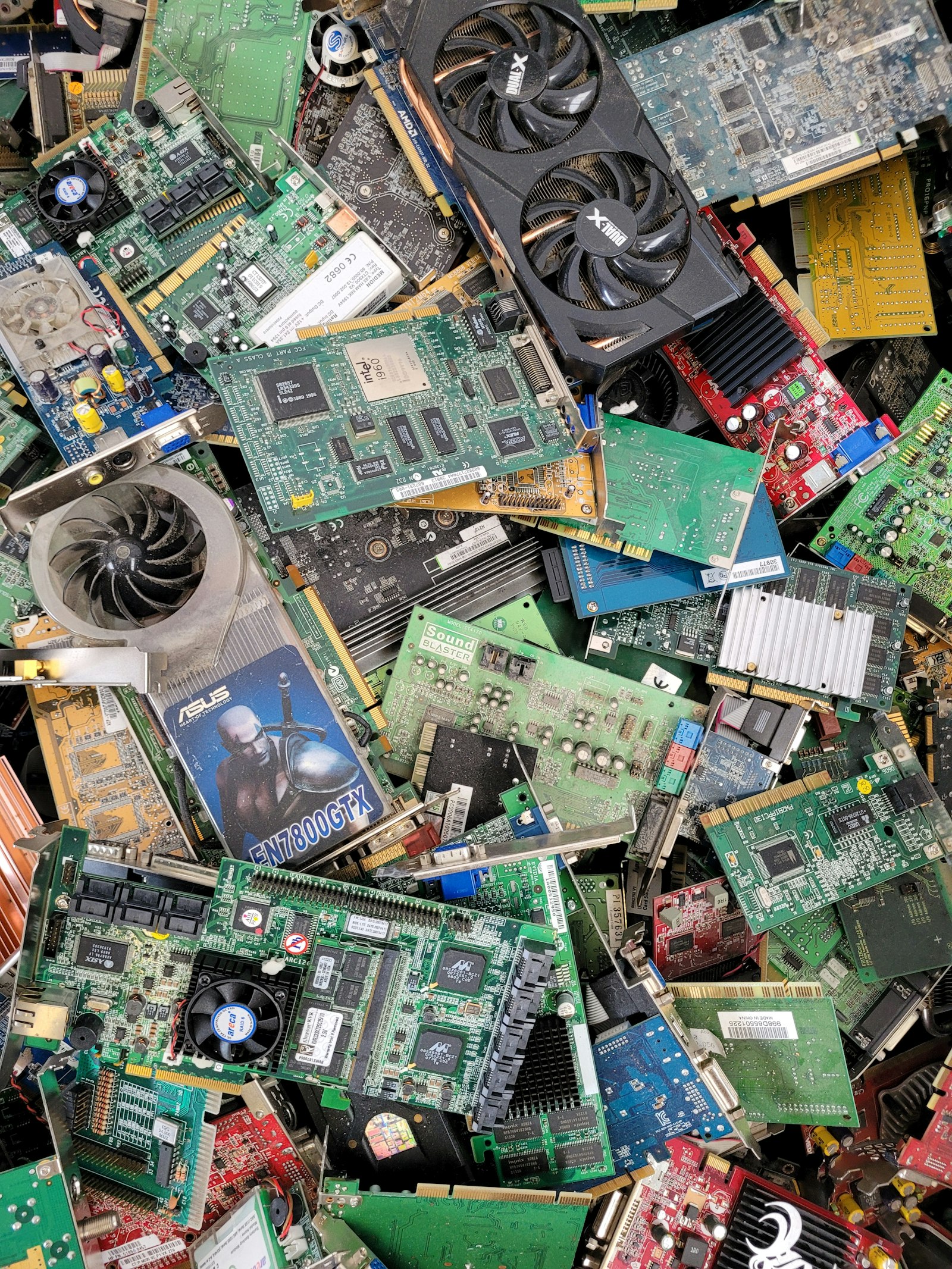
Recyclers already know there is critical-material value hiding inside the devices they process. Rare earths in magnets. Cobalt, nickel, and copper in batteries and boards. Precious metals distributed across connectors, plating, and processors. The problem is not knowing the value exists. The problem is that uncovering it on a per-device basis today is not worth the time or the sample cost.
That imbalance is one of the more interesting spaces for AI to move into over the next few years. Sensor-plus-model approaches to composition estimation, better computer-vision reads of board content, cheaper spectroscopy paired with device-identity data. None of these are mature, and none of them are a claim we or anyone else in this market can make today.
But the direction is plausible. If per-device composition intelligence gets cheap enough, routing decisions change. A “scrap” device stops being a residual category and becomes a graded feedstock stream with its own price. That matters most to the operators the article warns will otherwise see the least benefit from this cycle: smaller, less-integrated firms. Better composition visibility is closer to a leveler than a wedge.
Related signal: the alliance work forming around critical-mineral traceability points in the same direction. Refiner ReElement joining the Minerals Integrity & Resilience Alliance (MIRA) in May, and the broader read that downstream homes for certain fractions are becoming embedded in regulated, traceable supply chains, both suggest the market is quietly moving toward richer per-stream data as a matter of course.[2]
What this means for recyclers, not just ITADs
Most coverage of AI in the secondary electronics market defaults to the resale side: intake, grading, routing to refurb. Recyclers get treated as the downstream buyer, not the audience.
The disclosures argue for widening that lens. Sims Lifecycle Services is a lifecycle-plus-metals story that only makes sense if you look at both. Aurubis and Umicore are downstream in one sense and upstream in another. AI for electronics recycling, when it actually shows up in tools operators can use, is going to matter to a recycling floor as much as an ITAD dock, and possibly more, because the composition-visibility problem is more expensive there.
If the specificity premium is real, and the disclosures suggest it is, then AI resale pricing and AI-driven scrap intelligence are the two halves of the same thesis. They just enter the operation at different points.
Sources
- [1] David Daoud, “Metals and electronics recyclers report growth,” E-Scrap News (Resource Recycling), May 20, 2026. https://resource-recycling.com/e-scrap/2026/05/20/metals-and-electronics-recyclers-report-growth/
- [2] David Daoud, “How critical mineral alliances aim to shape the future of e-scrap metals,” E-Scrap News (Resource Recycling), May 21, 2026. https://resource-recycling.com/e-scrap/2026/05/21/how-critical-mineral-alliances-aim-to-shape-the-future-of-e-scrap-metals/
GreenSight Technologies helps ITAD and electronics recovery facilities move faster and capture more value by bringing real-time intelligence to device intake. Its automation tools support identification, cosmetic grading, valuation, and routing to determine the most profitable path for each device.
Media Contact
For more information, please contact: [email protected]