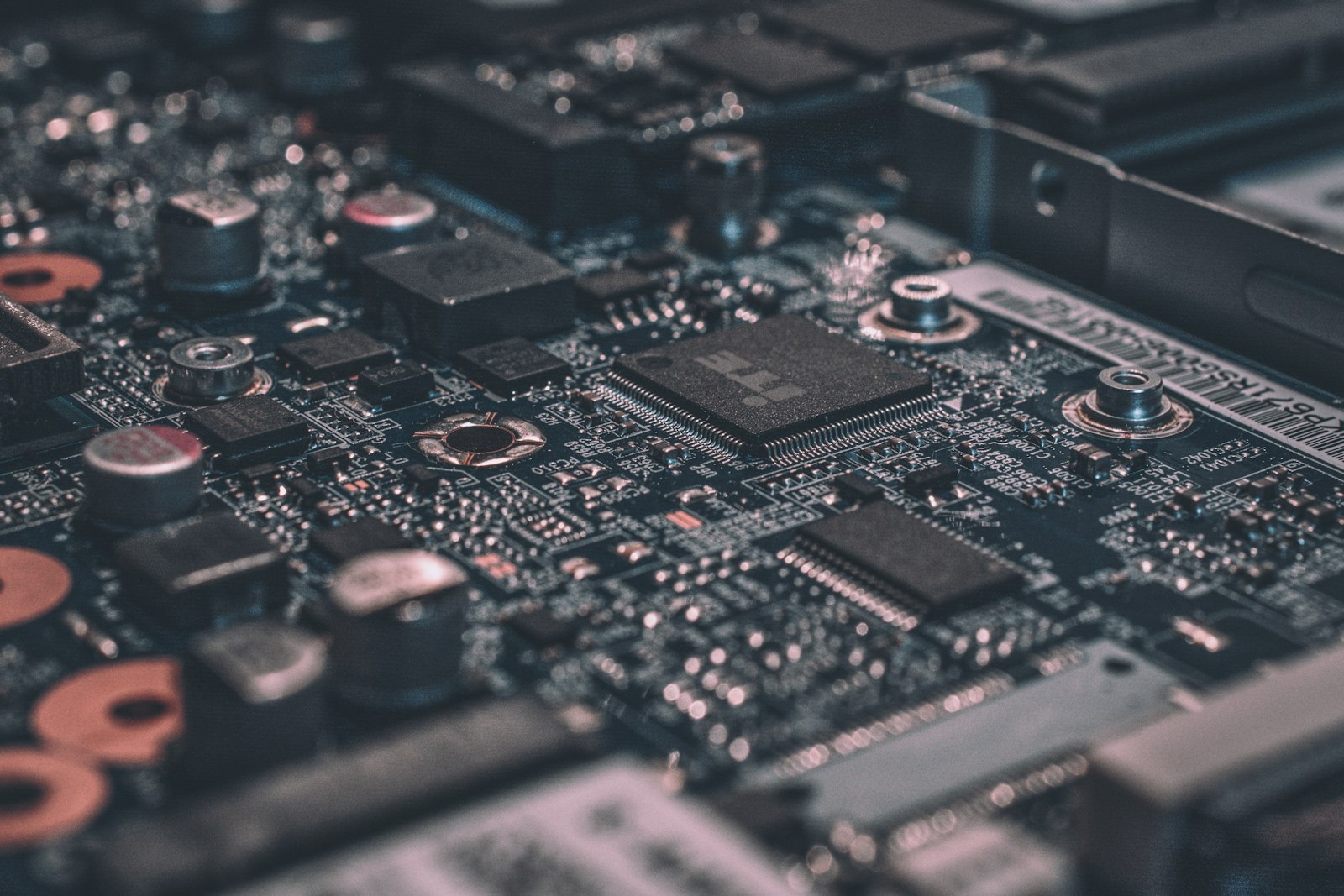
A three-year-old workstation comes across the dock. The reflex is to test it, wipe it, and resell it as a working unit. Pull it apart, though, and the numbers can tell a different story: the GPU, the CPU, the sticks of RAM, and the NVMe drive may sell for more on their own than the whole machine will fetch assembled.
That's the routing decision quietly changing across the sector, and it is where AI-driven routing matters. AI-driven routing means sending each retired device to its most profitable disposition path by weighing operational cost against live market value, per device, at the moment it hits receiving. Sometimes that path is whole-unit resale. Increasingly, for the right machine, it's “for parts.”
“For parts” used to be the fallback for a dead unit. In 2026 it is becoming a deliberate, and sometimes optimal, choice for a working one.
Why “for parts” stopped being the fallback
For years, whole-unit resale was the default because a working laptop was worth more than the sum of its pulled components, and parting out costs labor most operations would rather spend elsewhere. Component inflation is bending that math. Across Dell, HP, and Lenovo, management has flagged tight supply and rising prices for DRAM, NAND, and CPUs,[2] with Dell's operations chief describing memory and storage repricing that “feels like every day.”[1] Higher prices on new components lift the recoverable value of memory- and storage-rich devices entering ITAD and recycling streams.[1]
The effect lands on exactly the parts operators already know how to pull: RAM, solid-state storage, CPUs, and in higher-end machines, GPUs. Current commercial laptops and desktops ship with more DRAM and NAND than the same form factors did three years ago, and one analysis concludes that bulk shredding economics for that cohort are now materially less favorable than selective harvesting.[1] In a tight memory market, a device's harvestable components can be worth a meaningful share of its whole-unit price, and for some configurations more than the whole unit itself.
What is AI-driven routing in IT asset disposition?
AI-driven routing evaluates every incoming device against its possible end states, whole-unit resale, component harvesting, or materials recovery, and recommends the path with the highest expected return after labor and handling costs. It is one of the clearest early uses of AI for IT asset disposition (ITAD).
The “for parts” decision is difficult because it depends on four variables moving at once: whole-unit resale value, component prices, teardown labor, and client disposition rules. Those numbers change constantly, making static routing guides increasingly difficult to maintain.
The volume wave makes the call constant
The bigger issue is scale. Roughly a third of Dell's installed PC base is four years or older, and about 30 percent of HP's installed base is still on Windows 10 despite the October 2025 end of support, which one analysis translates to tens of millions of commercial PCs entering ITAD and recycling channels over the next 12 to 24 months.[1] Every one of those machines is a routing decision.
The server side compounds it. The AI build-out (Dell alone guided to $60 billion in AI server revenue for the fiscal year) is stacking up GPU-dense systems packed with high-value components that will reach end-of-life in volume around 2029 to 2031.[1] When the most valuable thing in a rack are the accelerators and memory inside it, “part out or keep whole” becomes a routine, high-dollar question. That's where scale becomes the challenge. When thousands of devices are moving through receiving, every routing decision has to be made quickly and consistently.
Where pricing and routing are heading
One idea comes up again and again: the value in a retired device is perishable, and it isn't distributed evenly. A server may be worth more as individual components than as a complete unit, but only while demand for those parts remains high. Miss that window, and the opportunity is gone before the device is even listed.
That's a hard call to make consistently across shifts and technicians. Component prices move, teardown labor is real, and client rules constrain what can be resold or must be destroyed. Static rules cannot weigh all of that at once, and gut feel does not scale past a certain volume. This is the case for AI pricing intelligence in the secondary electronics market: giving the routing decision a current read on what a device is worth whole and what it is worth in parts, before it moves.
None of this argues against the instincts operators built their businesses on. Broker relationships, master lists, and a good technician's eye still route most of the floor correctly, and whole-unit resale is still the right answer for most machines. The argument is narrower. For the configurations where the components have outrun the device, the price is moving faster than a static process can follow, and the upside goes to whoever sees it first.
A retired device has two prices now
Component prices will settle eventually. They always do. But the operators who come out ahead of this cycle will be the ones who stopped treating every device as a single line item and started asking, at intake, whether it is worth more whole or in parts. The workstation on your dock has two prices now, and the one that pays is whichever you can see first.
Knowing both numbers, before either moves, is the whole game.
GreenSight builds AI pricing intelligence for the secondary electronics market. If this is the problem you are wrestling with, we should talk.
Sources
- [1] David Daoud, “$60 billion in AI servers will create an ITAD challenge,” Resource Recycling / E-Scrap News, June 3, 2026. https://resource-recycling.com/e-scrap/2026/06/03/60-billion-in-ai-servers-will-create-an-itad-challenge/
- [2] David Daoud, “Hardware demand puts new focus on parts harvesting,” Resource Recycling / E-Scrap News, June 5, 2026. https://resource-recycling.com/e-scrap/2026/06/05/hardware-demand-puts-new-focus-on-parts-harvesting/
About GreenSight Technologies
GreenSight Technologies helps ITAD and electronics recovery facilities move faster and capture more value by bringing real-time intelligence to device intake. Its automation tools support identification, cosmetic grading, valuation, and routing to determine the most profitable path for each device.
Media Contact
For more information, please contact:
[email protected]