In a perfect world, a technician picks up a laptop, scans the correct barcode, and the asset details flow straight into the company's ERP.
But it doesn't always work that way.
Sometimes the barcode won't scan, or there are multiple labels and it's unclear which one contains the right information. The technician has to find the serial number, hope it's legible, type it into the system without making a mistake, and manually add the manufacturer and model.
Later in the process, another technician picks up that same laptop to evaluate its cosmetic condition. They reference a sheet of paper outlining their company's grading standards and make a judgment call. Meanwhile, the grader at the next station might look at an identical scratch and assign a different grade, despite following the same criteria.
Multiply these tasks across hundreds or thousands of devices, and the impact becomes significant.
Each step is relatively simple. Together, they represent a substantial amount of manual work, and every additional touch introduces another opportunity for error or inconsistency.
But what if much of that work could be automated using something as simple as a photo?
Computer vision is changing what's possible across the ITAD processing lifecycle. And while serial number recognition is an obvious starting point, the opportunity goes much further.
Serial number accuracy is the starting point
A recent ITAD Daily article, “Why Serial Number Accuracy Matters in IT Asset Disposition,” highlights how even a single missing device in a batch of 1,000 can create serious security and compliance risks.[1]
Serial numbers connect physical assets to chain-of-custody records, data sanitization results, and final disposition documentation. Getting them wrong can create problems that follow an asset long after it leaves the receiving floor.
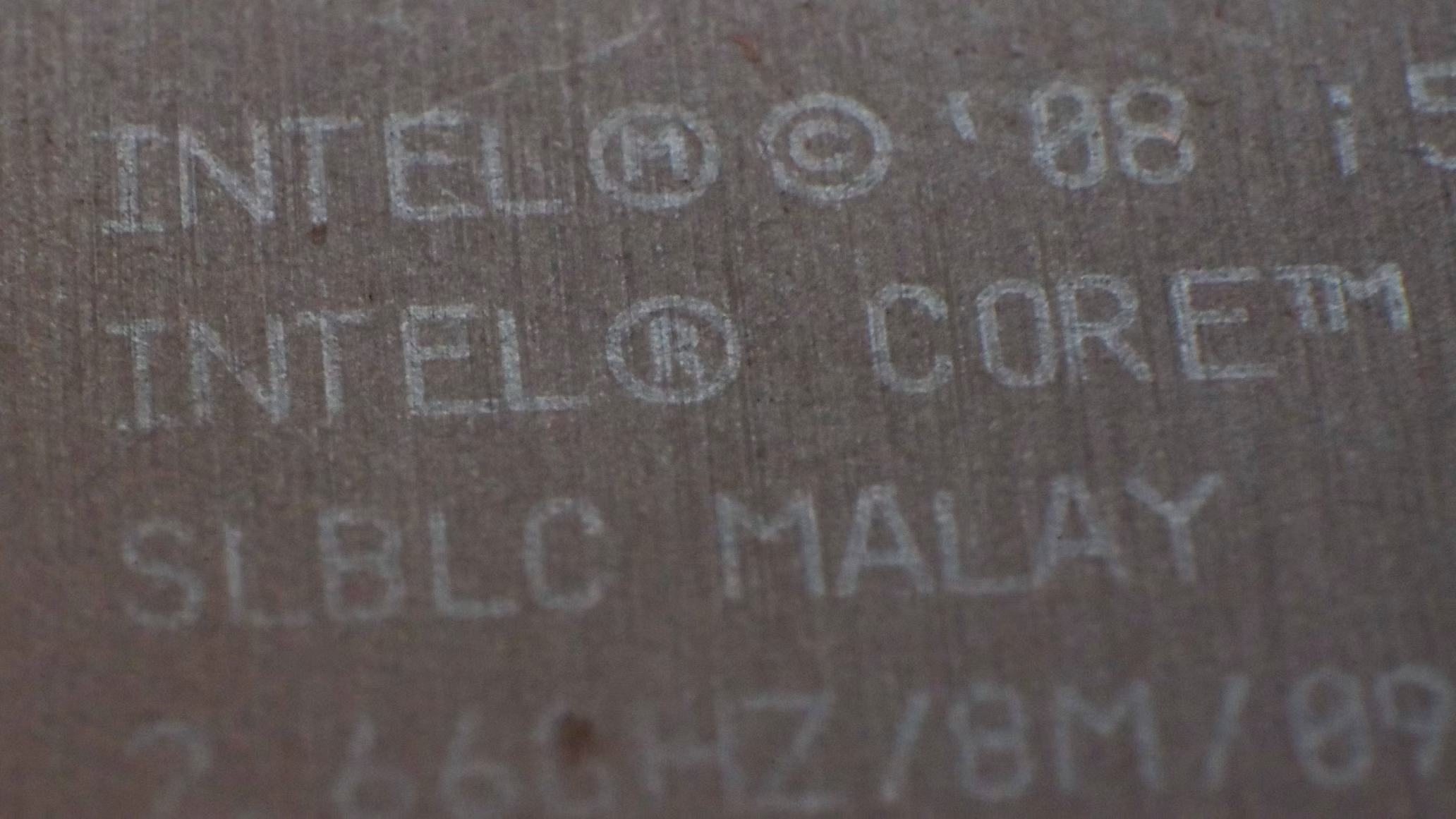
The article identifies familiar sources of error: confusing a zero with the letter O, mismatched asset tags, missed scans, and devices with damaged or unreadable labels.
Barcode scanning has already eliminated much of the need to type serial numbers manually. Optical character recognition (OCR) offers another step forward, allowing systems to extract serial numbers directly from images of device labels, including situations where a barcode cannot be scanned.
But focusing exclusively on serial numbers overlooks something important.
A camera doesn't just see the label. It sees the device.
And that creates an entirely different set of possibilities.
From reading labels to understanding devices
Traditional intake systems depend on someone telling the software what they're looking at.
A technician identifies the asset class, selects a manufacturer, searches for a model, and enters whatever additional information is available. The system records those decisions, but the identification work still falls largely on the person receiving the device.
Computer vision begins to reverse that relationship.
Using images of a device and its labels, AI systems can begin to recognize several pieces of information:
- Asset class: Is it a laptop, desktop, monitor, server, or networking device?
- Manufacturer: Can the system identify Dell, HP, Lenovo, Apple, or another manufacturer from visible branding and design?
- Model: Can visual characteristics, model labels, and reference data establish the correct product family or exact model?
- Serial number: Can the unique identifier be extracted from a label and validated against other available information?
These are not entirely separate tasks. They are different interpretations of visual information captured from the same device.
A photo might establish the asset class and manufacturer. A closer image of the label could supply the model and serial number. AI can connect those observations into a structured asset record rather than forcing a technician to create that record field by field.
Not every attribute can be determined visually. Internal specifications and unreadable identifiers still require additional verification. But the goal isn't to eliminate verification. It's to stop asking people to manually enter information that a system can already recognize.
Cosmetic grading is the next opportunity
Identification is only one stage of ITAD processing. Further downstream, cosmetic grading introduces a different challenge: consistency.
Two technicians can inspect the same laptop and assign different cosmetic grades. One considers a scratch minor. Another considers it enough to downgrade the device. Both may be following the same written grading policy, but interpreting it differently.
That variation matters because cosmetic condition directly influences resale value, buyer expectations, and potential returns.
Computer vision creates an opportunity to turn grading standards into something that can be applied more consistently.
Instead of relying entirely on individual interpretation, a facility could establish its own cosmetic criteria: acceptable scratch severity, dent thresholds, screen wear, and other condition factors. An AI system could then evaluate images captured at the grading station against those rules, producing a suggested grade alongside photographic evidence and an explanation.
Importantly, standardization doesn't necessarily mean every ITAD must adopt the same grading scale. Different buyers and resale channels may require different standards.
The opportunity is to make each organization's grading criteria repeatable, measurable, and defensible, regardless of which technician performs the inspection.
An image-based record also makes it easier to review a disputed grade without physically locating the device again.
Cosmetic inspection still cannot replace functional testing, and image quality matters. But applying consistent visual assessment at the grading stage could eliminate a significant amount of subjective work before an asset reaches resale.
What happens when AI connects the different stages of processing?
The real transformation comes when these capabilities stop operating as isolated tools.
Imagine a receiving station where a technician picks up a laptop, captures an image of the device and its label, and receives a proposed asset record.
The system identifies the manufacturer, model, and asset class. It reads the serial number, flags any uncertainty, and sends the verified information into the facility's ERP or inventory management system.
The technician only needs to intervene when something can't be confidently identified.
Later, that same laptop reaches the cosmetic grading station. Another set of images is captured, this time focused on the device's physical condition. The system evaluates visible wear against the facility's established grading criteria and suggests a grade, with the supporting images attached to the asset's existing record.
Again, the technician reviews exceptions rather than starting from scratch.
These are two distinct steps in the processing workflow, but they're contributing to the same increasingly complete picture of the asset.
Accurate identification supports market valuation. Consistent cosmetic grading improves the information available for resale pricing. Together with functional testing, sanitization results, and processing costs, those records can support more informed decisions about refurbishment, resale, parts harvesting, or recycling.
The important change isn't any one automated task. It's that each stage of processing can capture more reliable information, with less manual effort, and make it available to the next.
Instead of simply moving devices through a series of manual checkpoints, the facility begins building a richer, more consistent understanding of every asset as it moves through the operation.
The future of ITAD processing is exception-based
There will always be devices that require human attention.
Labels get damaged. Manufacturers reuse similar chassis designs. Cosmetic defects can be difficult to distinguish under poor lighting. Some equipment arrives incomplete, modified, or without reliable identifying information.
No responsible system should pretend those challenges disappear.
The better model is one where AI handles routine identification and documentation, expresses uncertainty when necessary, and directs technicians toward the assets that genuinely require their expertise.
At intake, that could mean technicians only need to investigate devices the system couldn't confidently identify.
At cosmetic grading, it could mean reviewing borderline conditions, unusual damage, or cases where the system isn't confident in its assessment.
Different stages, different tasks, but the same underlying shift.
Instead of having humans perform every task and relying on software to record the result, software begins performing the routine work while humans verify exceptions.
That changes the role of the technician from primary data-entry operator to exception handler and quality reviewer.
It also creates a more scalable process. As processing volume increases, the workload becomes less dependent on the number of fields that must be entered manually or routine assessments that must be performed from scratch.
ITAD Daily's focus on serial number accuracy points to a problem the industry cannot afford to ignore. Every asset needs a reliable identity, and every movement and disposition decision needs to be traceable.
Computer vision offers a way to strengthen that foundation while capturing far more information at different stages of an asset's journey.
The bigger opportunity isn't simply automating serial numbers, identifying models, or assigning cosmetic grades. It's rethinking how information is captured and decisions are made throughout ITAD operations.
The next generation of ITAD processing won't simply be better at recording what technicians see. It will help technicians understand, verify, and act on what's in front of them.
And the first step may be as simple as taking a photo.
Sources
- [1] Why Serial Number Accuracy Matters in IT Asset Disposition. ITAD Daily, October 27, 2026. https://itaddaily.com/2026/10/27/why-serial-number-accuracy-matters-in-it-asset-disposition/
About GreenSight Technologies
GreenSight Technologies helps ITAD and electronics recovery facilities move faster and capture more value by bringing real-time intelligence to device intake. Its automation tools support identification, cosmetic grading, valuation, and routing to determine the most profitable path for each device.
Media Contact
For more information, please contact:
[email protected]